
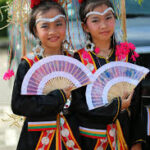
Julienne Loreto is proud of her heritage and will be performing a song that is close to her heart and her culture!
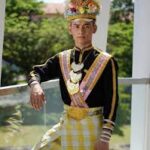
“Pahuway” (Rest) by Rain Celmar. Here is the original song, it has both Cebuano (a Visayan language) and English lyrics: Click here
Julienne will also have a stall with books to giveaway and to talk more about her identity.

The Origins of the Visayan People in the Philippines
The Bisaya people, often referred to as Visayans, are one of the largest ethnolinguistic groups in the Philippines. Their roots trace back thousands of years, with a complex history shaped by migration, trade, and cultural exchange. Anthropologists and historians suggest that the Bisaya originated from Austronesian-speaking peoples who migrated from Taiwan and Southeast Asia around 2000–1500 BCE.
Early Bisaya communities settled primarily in the central and southern islands of the Philippines, including Cebu, Bohol, Leyte, Panay, and Negros. These islands provided fertile lands and rich marine resources, fostering agriculture, fishing, and trade networks. Archaeological evidence shows that the Bisaya were skilled in pottery, weaving, and boat-building, and they maintained vibrant social structures led by local chieftains known as datus.
Before Spanish colonization in the 16th century, the Bisaya engaged in inter-island trade with neighbouring groups and even with early Malay and Chinese merchants. They practiced animistic religions, worshipping nature spirits and ancestral deities, though later many embraced Christianity due to Spanish influence.
Linguistically, the Bisaya speak various Visayan languages, with Cebuano being the most widely spoken. Despite historical changes and migrations, the Bisaya have retained strong cultural traditions, including music, dance, festivals, and oral literature that continue to define their identity in the modern Philippines.
Disclaimer: This description is for educational purposes only. It aims to provide an overview of the Bisaya people based on historical and anthropological research and may simplify complex cultural histories.
